

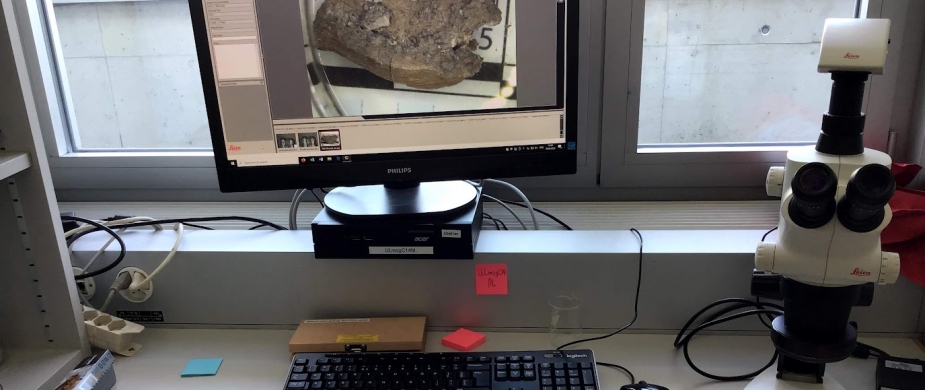
Přednáška | Radiocarbon dating in Medieval Archaeology
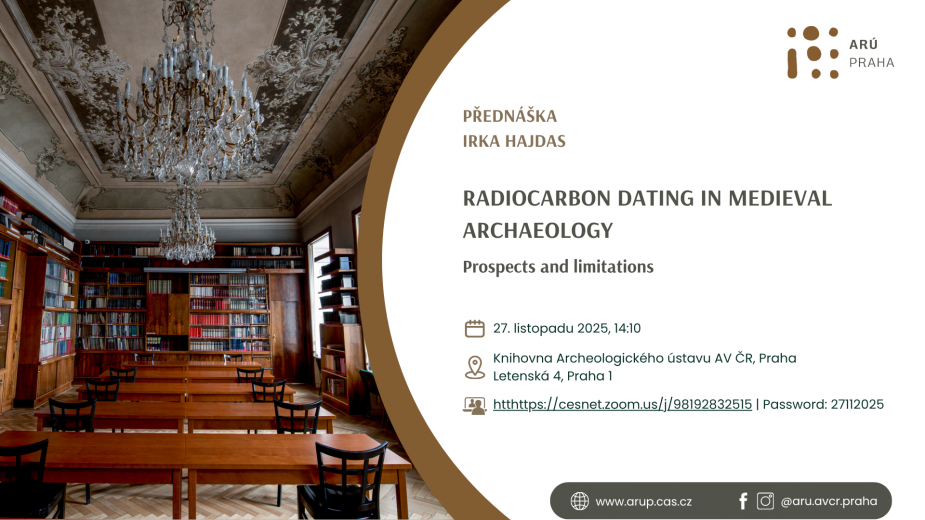
Radiocarbon dating in Medieval Archaeology – Prospects and Limitations
Irka Hajdas (ETH Zurich)
27. listopadu, 14:10
Přednáška proběhne hybridně – v knihovně ARÚ v Letenské 4, Praha 1, a online přes Zoom (https://cesnet.zoom.us/j/98192832515 | Password: 27112025).
Abstrakt:
During the nearly 80 years since the invention of the radiocarbon dating method the method found its application in a variety of disciplines. From the early days of radiocarbon method, archeology has been one of the main applications. The long half-life of 14C allows investigation of the last 50 thousand years, which covers the history of modern humans. The importance of 14C chronologies for archeology cannot be underestimated but limitations of radiocarbon dating method should be also considered. The most frequent question in discussion of the chronologies is the reliability of radiocarbon ages and their precision. Moreover, each period is affected by the problems of calibration.
This paper will present examples of radiocarbon dating in medieval archeological studies which illustrate the potentials of the method but also complexity when applied for period 500-1500 CE.
One aspect is the choice of material available for this period. In addition to analyzing bones, charcoal and wood i.e., traditional archeological material there is also possibility of dating mortar. The method is complex and requires multidisciplinary approach to evaluate the reliability of analysis.
-
Download invitation in pdf (2.08 MB)Stáhnout