
Přednáška | Prehistoric Occupation of Karst Regions in Slovakia
Prehistoric Occupation of Karst Regions in Slovakia: New Multidisciplinary Evidence
Adrián Nemergut
26. únor, 14:10
Přednáška proběhne pouze ONLINE přes Zoom (https://cesnet.zoom.us/j/97593496581 | Passcode: 26022026).
Abstrakt:
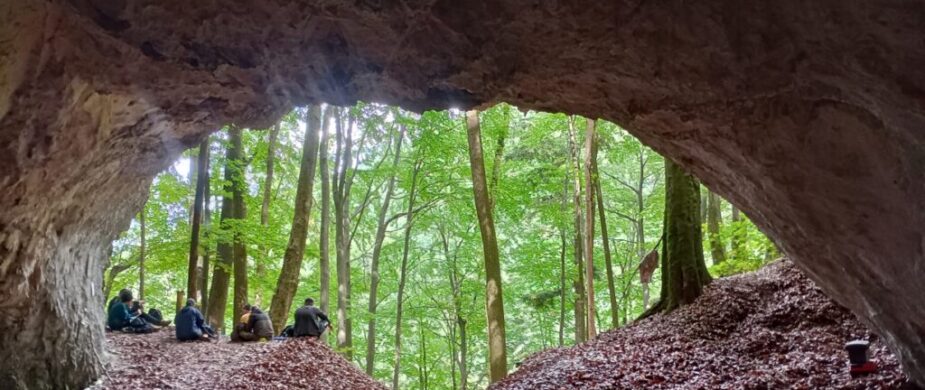
Karst landscapes of Slovakia have long served as shelters for prehistoric communities, settlement activites in this type of environment were not really intensive, but the evindence is usually well preserved. Most of the archaeological research in the karst was conducted by the ancient excavation methods and did not revealed all important information. In the course of the Intercave project (fundend by APVV) and Shelter project (funded by Visegradfund) revision of chosen sites and materials was conducted. Recent research has brought significant new evidence from three key cave sites: Veľká Ružinská jaskyňa, Dzeravá skala, and Hučiaca diera, prompting a reassessment of human occupation in Slovak karst regions.
This lecture presents the results of ongoing multidisciplinary investigations at these sites, integrating archaeological excavation, stratigraphic analysis, lithic studies, geoarchaeology, palaeoenvironmental reconstruction, and selected bioarchaeological approaches. Newly documented stratified sequences, artefact assemblages, and environmental proxies provide fresh insights into the chronology, intensity, and character of prehistoric occupations.
At Veľká Ružinská jaskyňa, recent excavations have revealed previously undocumented cultural horizons, refining our understanding of site formation processes and settlement dynamics. At Dzeravá skala, new analyses contribute to the reconstruction of habitation patterns and regional connections, while investigations at Hučiaca diera shed light on the functional variability of cave use within karst landscapes.
By combining archaeological, environmental, and spatial data, this research demonstrates how cave sites functioned not merely as isolated shelters but as integral components of broader settlement systems in Central Europe. The new evidence from these three sites significantly enhances our understanding of prehistoric adaptation, mobility strategies, and human–environment interactions in Slovak karst regions.