
Lecture | Skulls, Sherds, Smashed Skeletons
Skulls, Sherds, Smashed Skeletons. The exceptional Linear Pottery ritual site of Herxheim near Landau (Palatinate)
Andrea Zeeb-Lanz (Directorate-General for Cultural Heritage Rhineland-Palatinate, Directorate State Archaeology, Bureau Speyer)
19 March, 14:10 CET
The lecture takes place onsite in the Library of the Institute of Archeology in Prague (Letenské 4, Praha 1) and online via Zoom (https://cesnet.zoom.us/j/93528160936 | Passcode: 19032026).
Abstrakt:
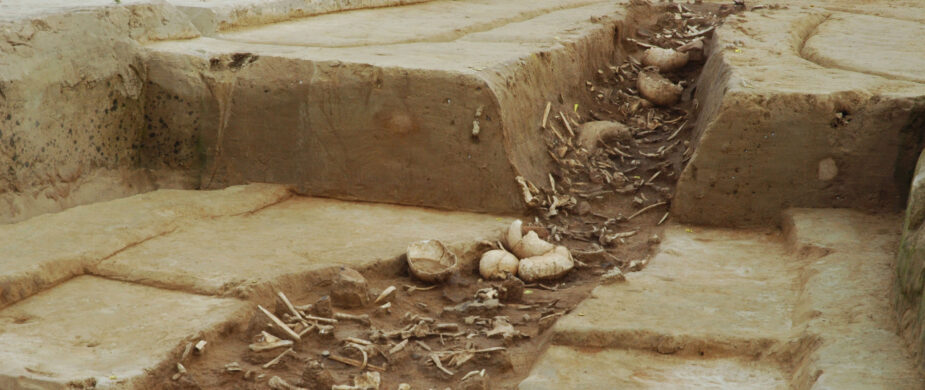
The site of the late 6th millennium BC settlement with a double ditch at Herxheim, belonging to the Linear Pottery culture of the first European farmers, is meanwhile well known throughout Europe and remains unique to this day. Really extraordinary: more than 1,000 people were killed here in a short period of time, then dismembered and their bones ultimately smashed into small fragments. The skulls of the victims received a special treatment – the skullcap was carefully removed and preserved as a kind of ‘cup’ or ‘bowl’. Numerous other artefacts were found together with the human remains – the latter comprising more than 80,000 bones, bone fragments, skulls and skullcaps.
Particularly noteworthy is the considerable quantity of decorated pottery of exceptional quality, which was also deliberately smashed. The decorative styles of the fine ceramics point to a number of regions, some of which are up to 400 km away from the site as the crow flies.
Important questions about Herxheim include:
- Who were the manipulated dead of Herxheim?
- Who were the participants in the ritual?
- What is the significance of the magnificent pottery with its diverse decorative styles – and where were the vessels produced?
Although Herxheim remains kind of “shrouded in mystery” to this day, important new findings have been gained in recent months, both into the identity of some of the individuals from Herxheim and into genetic questions. Numerous collaborative projects with specialists from various related disciplines are constantly yielding new and surprising results. All previous research results will be presented in a richly illustrated lecture, giving insight into the puzzle of this enigmatic and unique early Neolithic site.